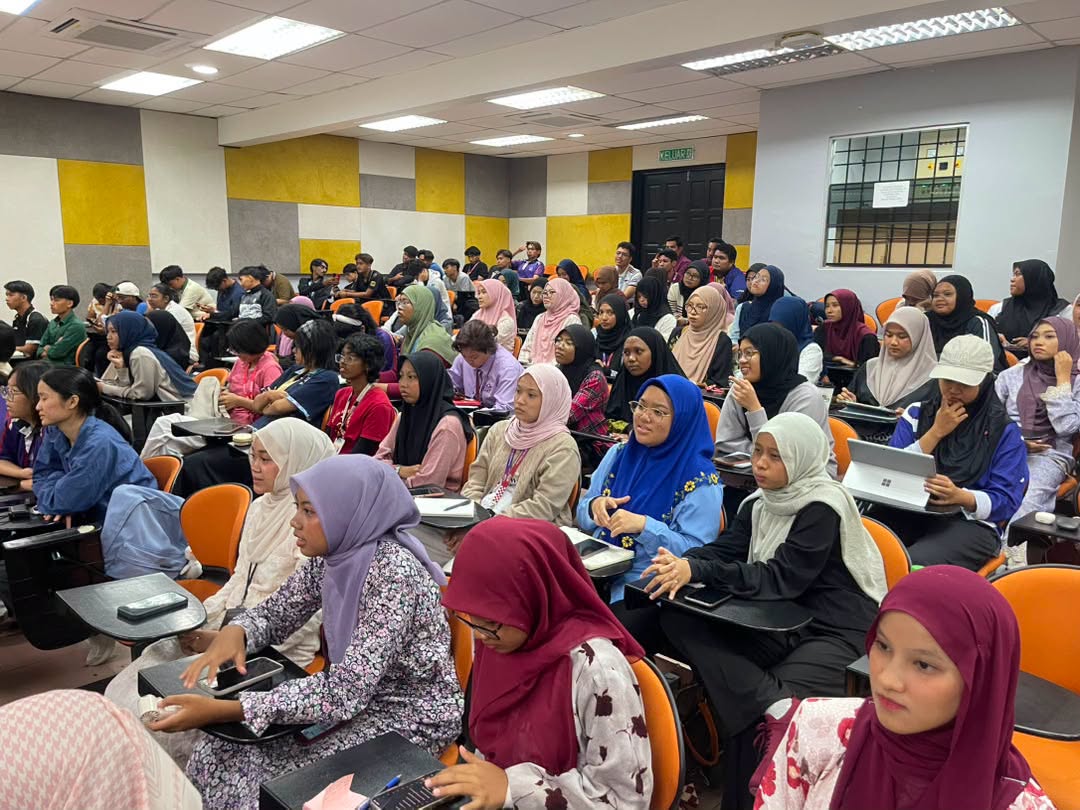
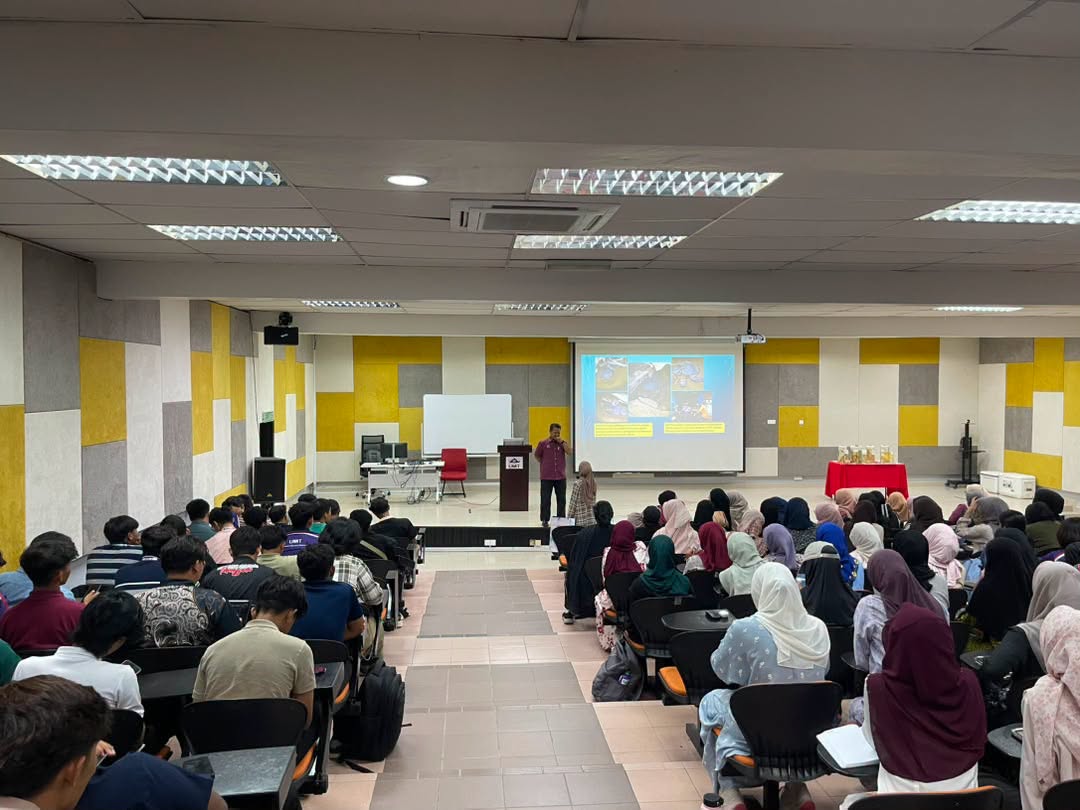
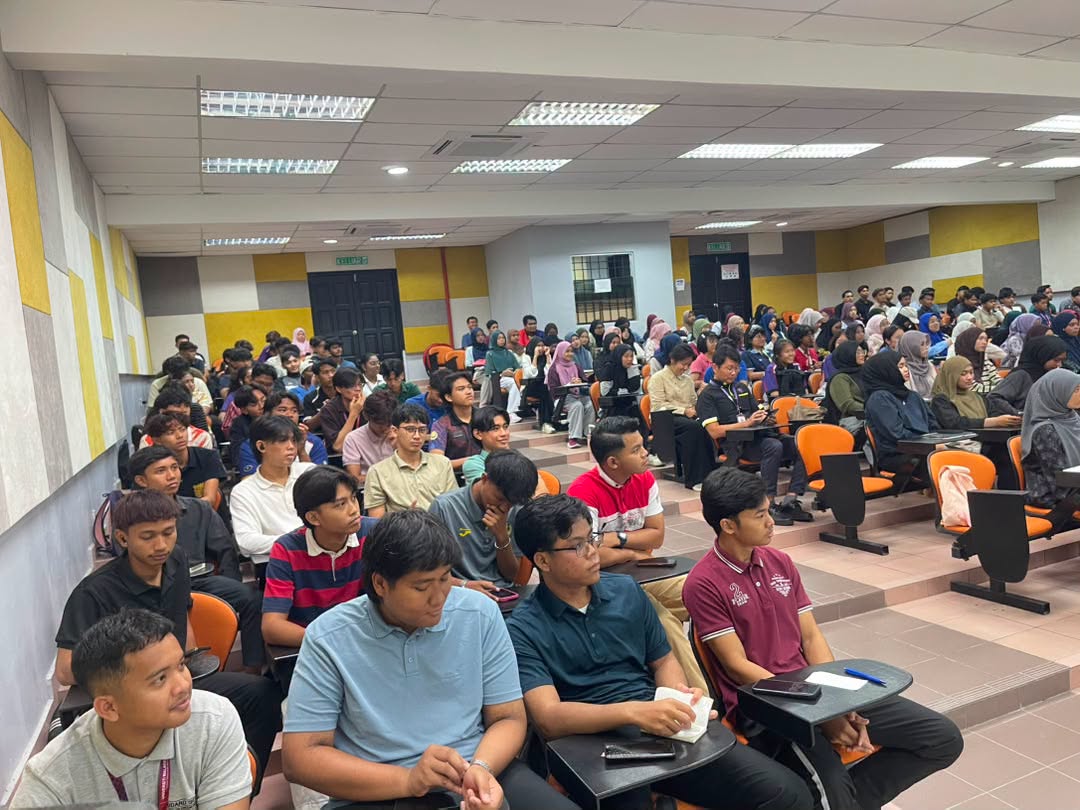
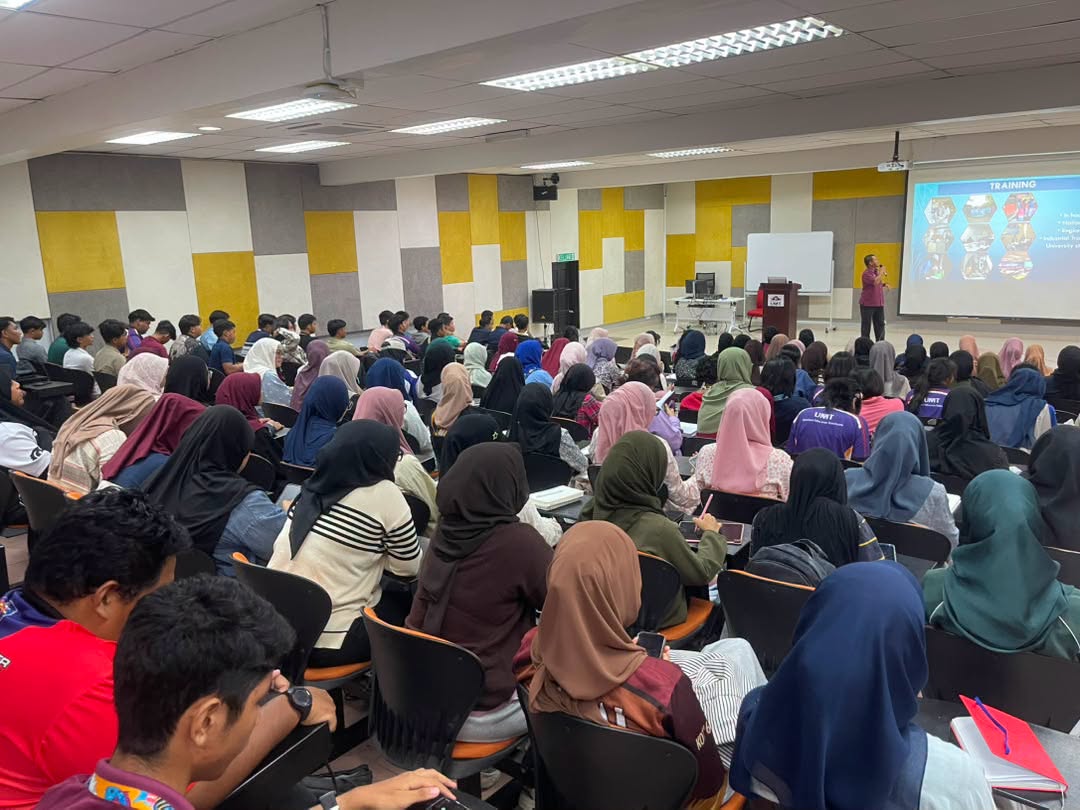
On September 8, 2026, at 10:00 AM, an ‘Industry in the Classroom’ program was held at the Lecture Hall of Universiti Malaysia Terengganu, specifically for first-year students of the Fisheries Diploma program. Organized by the Faculty of Fisheries and Aquaculture Science, the event was attended by 174 students currently enrolled in the Fish Biology course. Mr. Mohd Tamimi bin Ali Ahmad, a Research Officer from the Southeast Asian Marine Resources Institute (ISMAT-SEAFDEC/MFRDMD), was invited as the guest speaker to present on the topic: ‘The role of fisheries research in the sustainability of fisheries resources and food security in Malaysia.’
The program began with an introduction to ISMAT, covering its background and the objectives behind its establishment. Various facilities available at ISMAT such as reference materials, the library, laboratories, and seminar rooms were also highlighted. This was followed by a discussion on the close cooperation in the fisheries sector between Malaysia and other Southeast Asian nations, particularly regarding regional fish stock assessments. The talk then expanded to cover research on commercially important fish species that drive Malaysia’s economy, as well as species facing the threat of extinction. Further insights were shared regarding studies on fish gonad maturity, shark species, and other related topics.
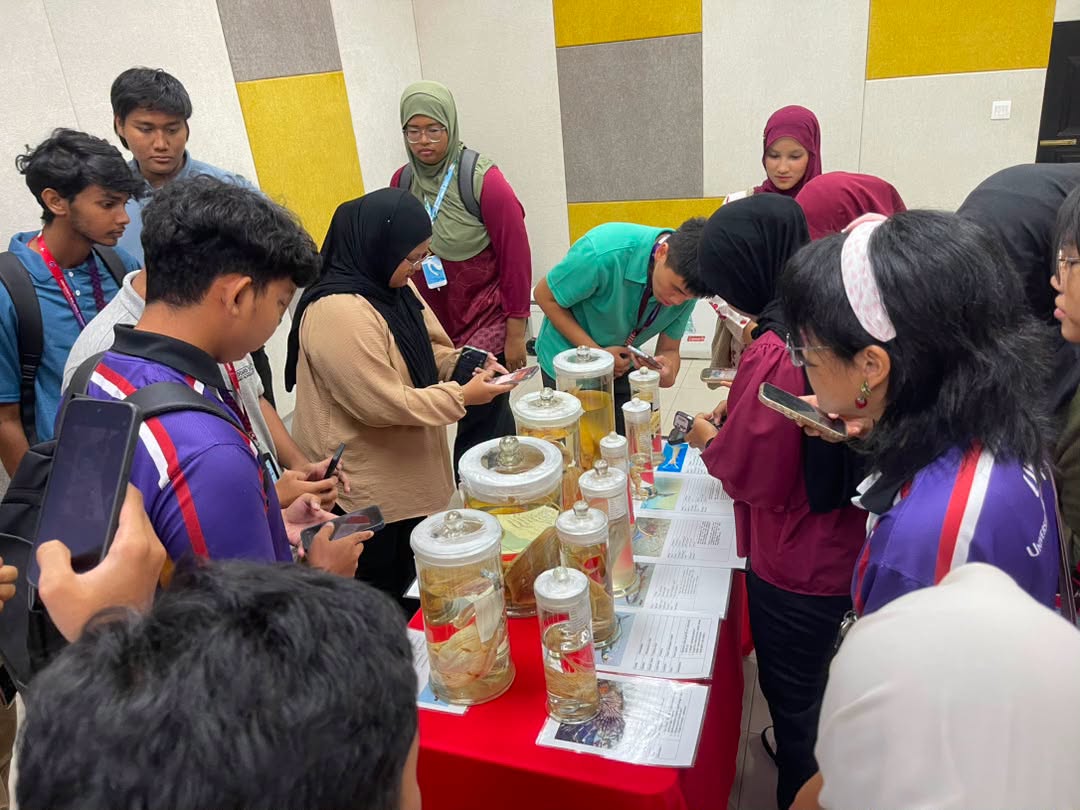
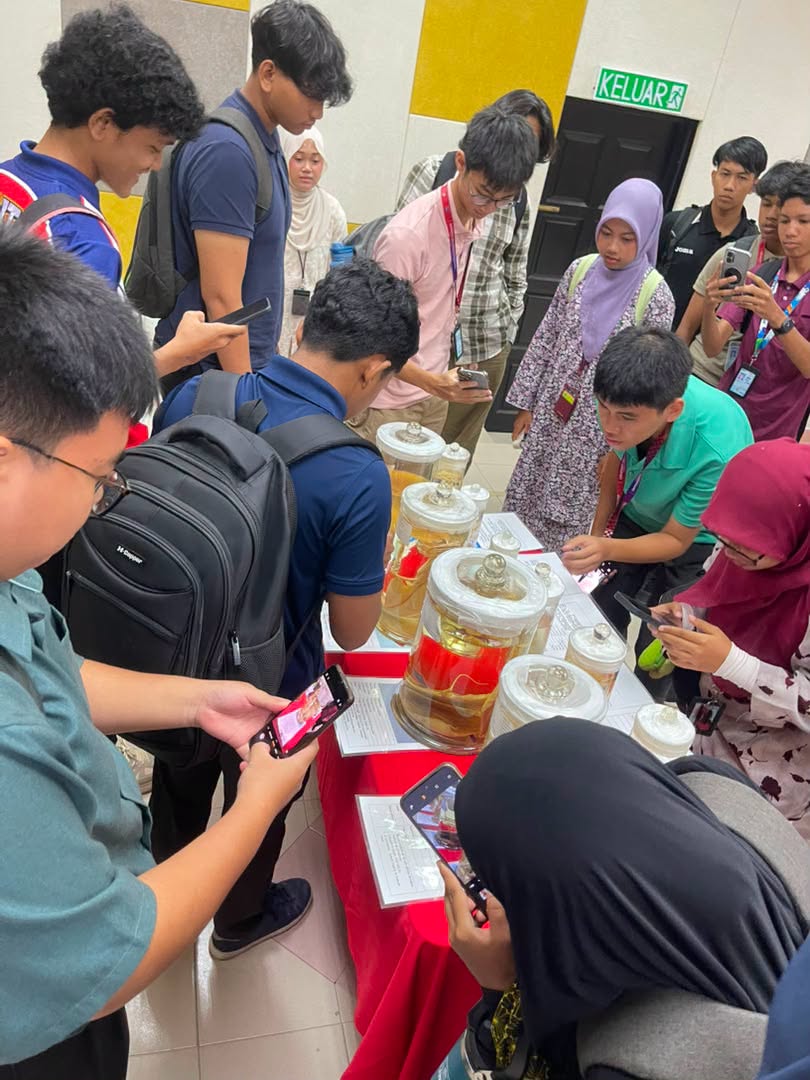
Mr. Mohd Tamimi also discussed the challenges inherent in fisheries research. One such challenge involves conducting post-mortems on marine life stranded on the country’s shores to determine the cause of death. He also shared challenges related to sea turtle research, citing cases of turtle deaths caused by accidents and diseases. At the end of the session, students had the opportunity to view fish and marine life specimens specially brought from ISMAT to UMT. Among the interesting specimens were the Sarawak pygmy swell shark (Cephaloscyllium sarawakensis), discovered in Sarawak in 1998; the robber harpiosquilid mantis shrimp (Harpiosquilla harpax); the diamond squid (Thysanoteuthis rhombus); and the double-ended pipefish (Trachyrhamphus bicoarctatus).
The program was interspersed with quizzes on fisheries, and the students performed well in answering the questions posed. Mr. Mod Tamimi also shared tips on navigating university life and encouraged interested students to apply for industrial training placements at ISMAT. The program, which was attended by FSPA lecturers and ISMAT staff, received positive feedback from the students. Overall, the students found the program eye-opening regarding the real world of fisheries, providing them with a deeper understanding of fisheries research and the sector’s importance to the nation.